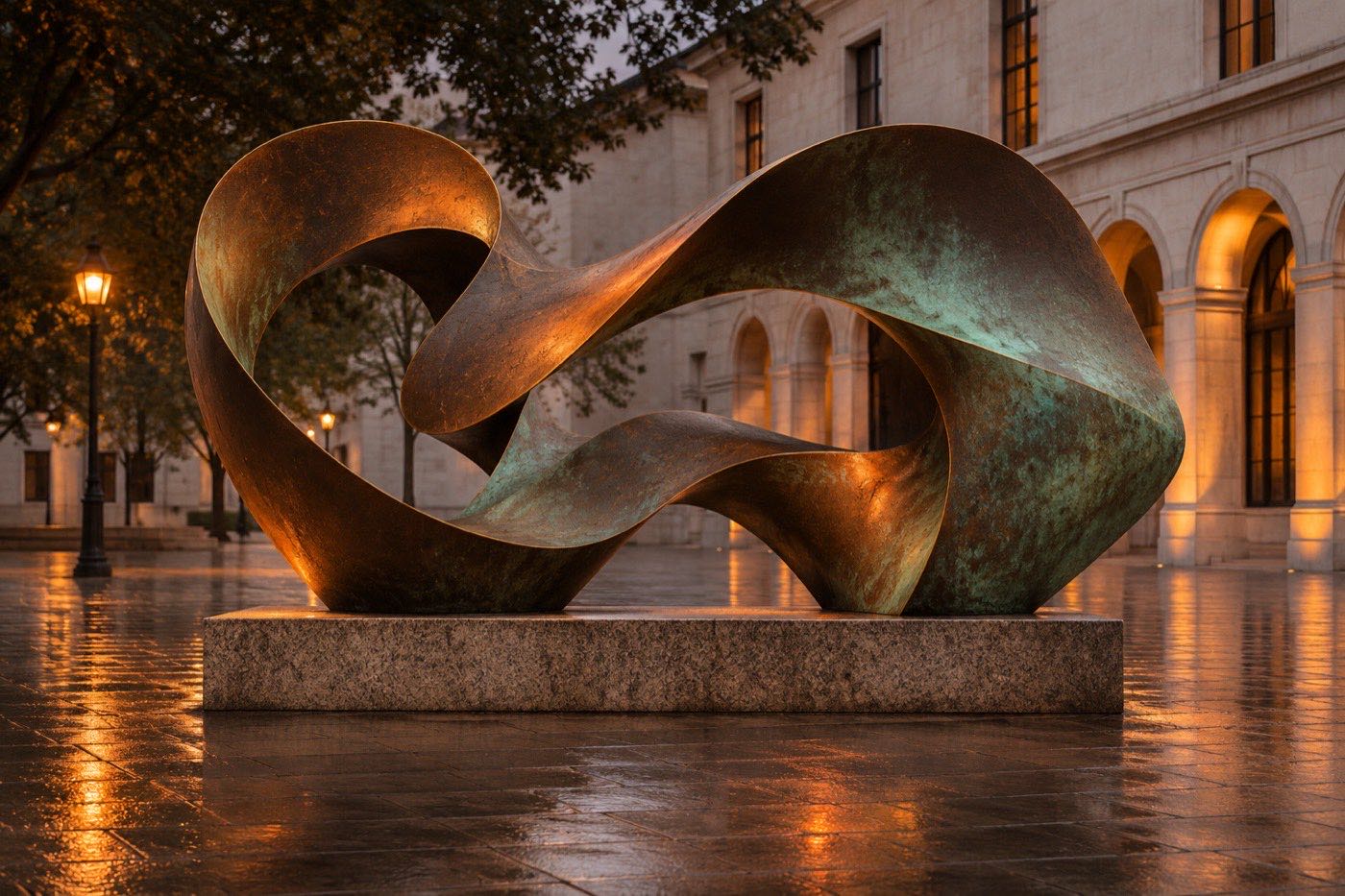
Guide 01
Lost wax casting
The lost wax casting process step by step: model, mould, wax, sprues, ceramic shell, burnout, pour and chasing, and why the method is still used for bronze.
Read the guide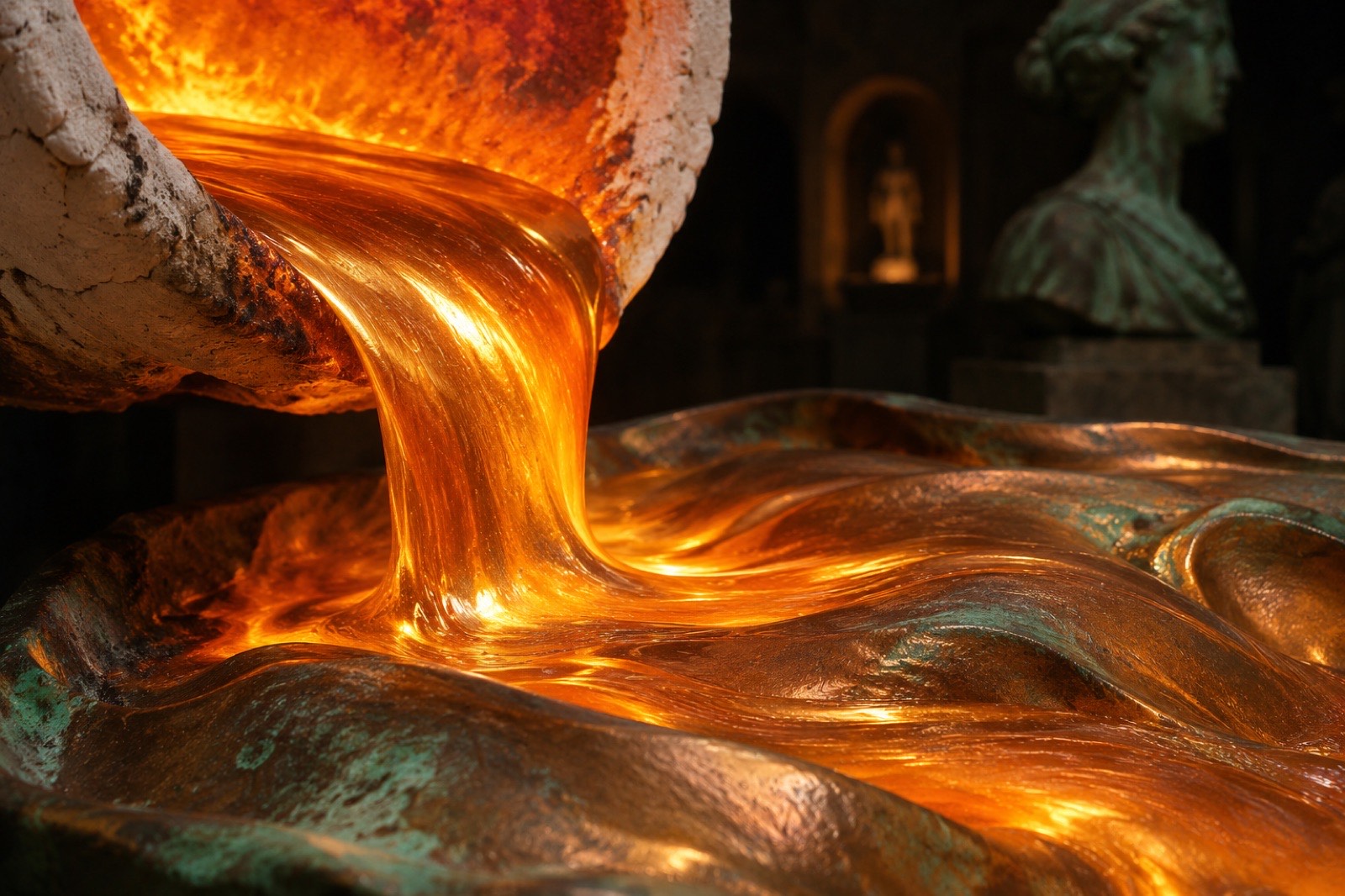
An independent guide to sculpture
Bronze sculpture fascinates people with its material, the techniques used to make it and its durability. At Pour and Patina, we explain how it is made, from the first wax model to the finished patina. We are an independent educational site about sculpture. We are not a studio, a gallery or an artist. We do not take commissions or sell anything. Here you will find useful background for looking at monuments, reading about casting or comparing materials.
The lost wax process
The method is thousands of years old: the oldest known lost wax castings are gold objects from the Varna Necropolis in Bulgaria, about 6,500 years old.
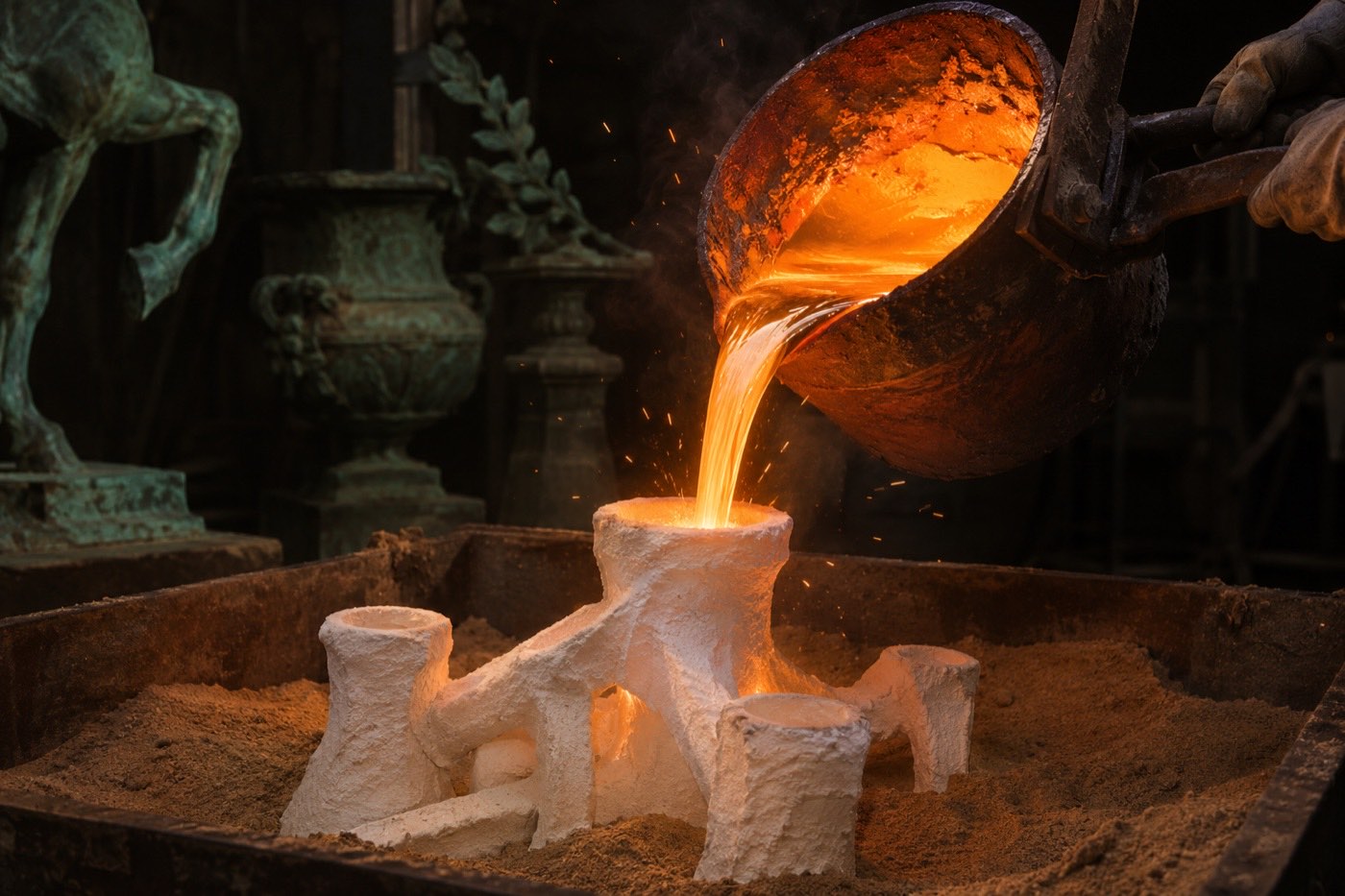
The sculptor models the original in wax, clay or another material.
A soft rubber or silicone mould takes the negative, held in a rigid plaster or fibreglass jacket.
Molten wax is swirled inside the mould in thin coats until the hollow copy is thick enough.
The wax copy is freed and a heated tool rubs out seams so it looks like the finished piece.
A tree of wax channels and a pouring cup is added so metal can flow in and air can escape.
Repeated dips in silica slurry and grit build a hard shell, thicker for bigger pieces.
In the kiln the shell hardens and the wax melts out. This is the wax that is lost.
Bronze melted in a crucible is poured into the hot shell, set cup up in a tub of sand.
The shell is broken away, sprues are cut off, the metal is chased and a patina may follow.
Bronze is the most popular metal for cast sculpture, so a finished casting is often called simply "a bronze". A typical modern bronze is about 88 percent copper and 12 percent tin. By one definition, statuary bronze is 90 percent copper and 10 percent tin. Bronze is most often cast using the lost wax method, known as cire perdue. The oldest known examples of this technique are about 6,500 years old and come from the necropolis in Varna, Bulgaria.
Bronze alloys expand slightly just before they solidify, filling the finest details of the mold. As they cool, they shrink a little, which helps separate the casting from the mold. Bronze's strength and ductility also allow figures with dynamic poses and thin supports, which are difficult to achieve in stone or ceramic.
Traditional durable materials for sculpture include metal, especially bronze, as well as stone and ceramic. Wood is cheaper but less durable. Our guide to sculpture materials compares these options and explains why bronze is so often chosen for casting.
Patina is a thin layer on the surface of copper and its alloys. Green patina forms naturally on bronze over the years, and artists speed up the process by applying chemicals to hot metal.
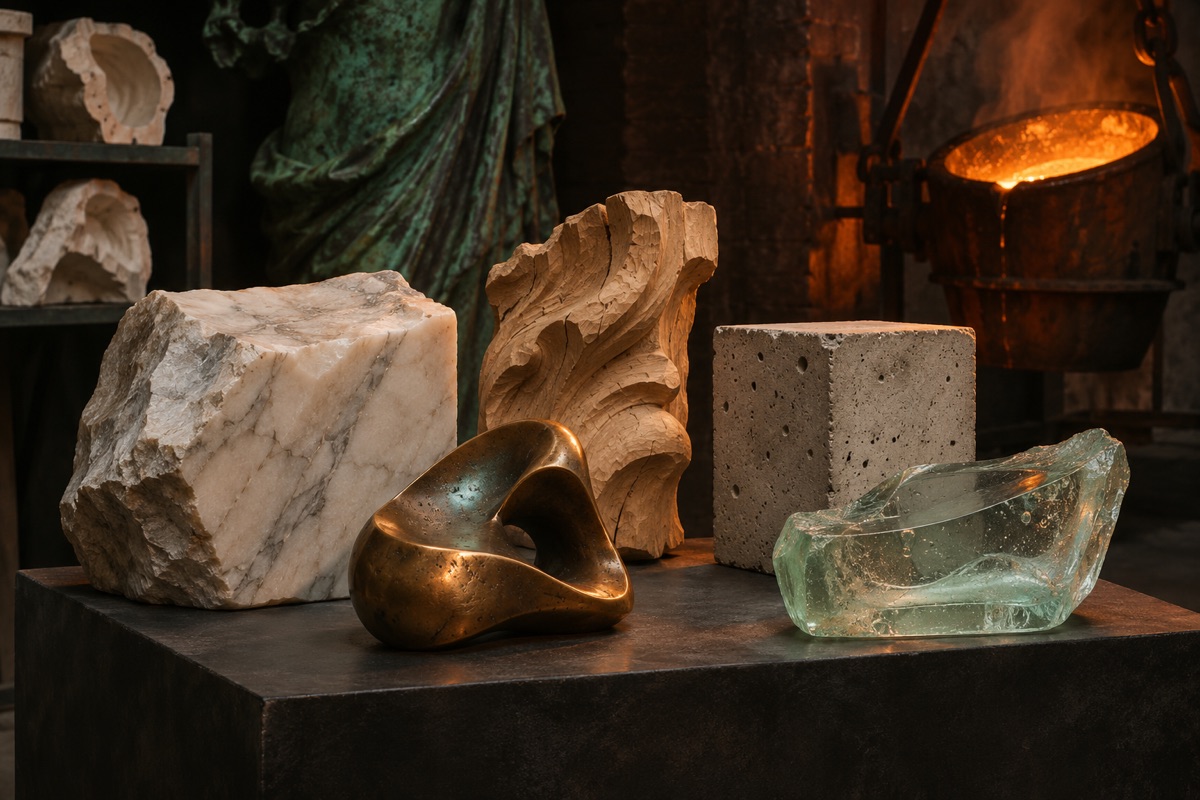
Metal, stone and pottery are the classic durable materials of sculpture. Wood is cheaper and lasts less well. Each one asks for a different way of working.
The oldest and still the most popular metal for cast sculpture. Strong and not brittle, so figures can stretch and balance on thin supports.
Carved by the controlled removal of material from a block. Permanent, which is why so much ancient stone work survives.
Light, easy to carve and able to hold fine detail, but open to decay, insects and fire, so outdoor wood rarely lasts.
A material that sets cold after mixing, so it can be cast into moulds, like plaster, clay and epoxy resins.
Cast, kiln formed, blown or shaped hot. Large glass sculpture is a recent development.
Public art is created for the general public through a public process. It is placed in public space and is physically and visually accessible. Percent for art programs usually set aside about one percent of construction costs for public art. Monuments belong to this category, and we cover them in a separate guide.
Sculpture has served religious worship for centuries. Typical examples in Western churches include the crucifix, the Stations of the Cross and altars with sculpture. We cover this subject in our guide to liturgical sculpture.
We have prepared six guides: lost wax casting, patina on bronze, a comparison of sculpture materials, public art and monuments, liturgical sculpture, and how commissioning a sculpture works. Each covers a single stage or topic, so you can read them in order or choose individual guides. We aim to explain things plainly, without sales offers or encouragement to buy.
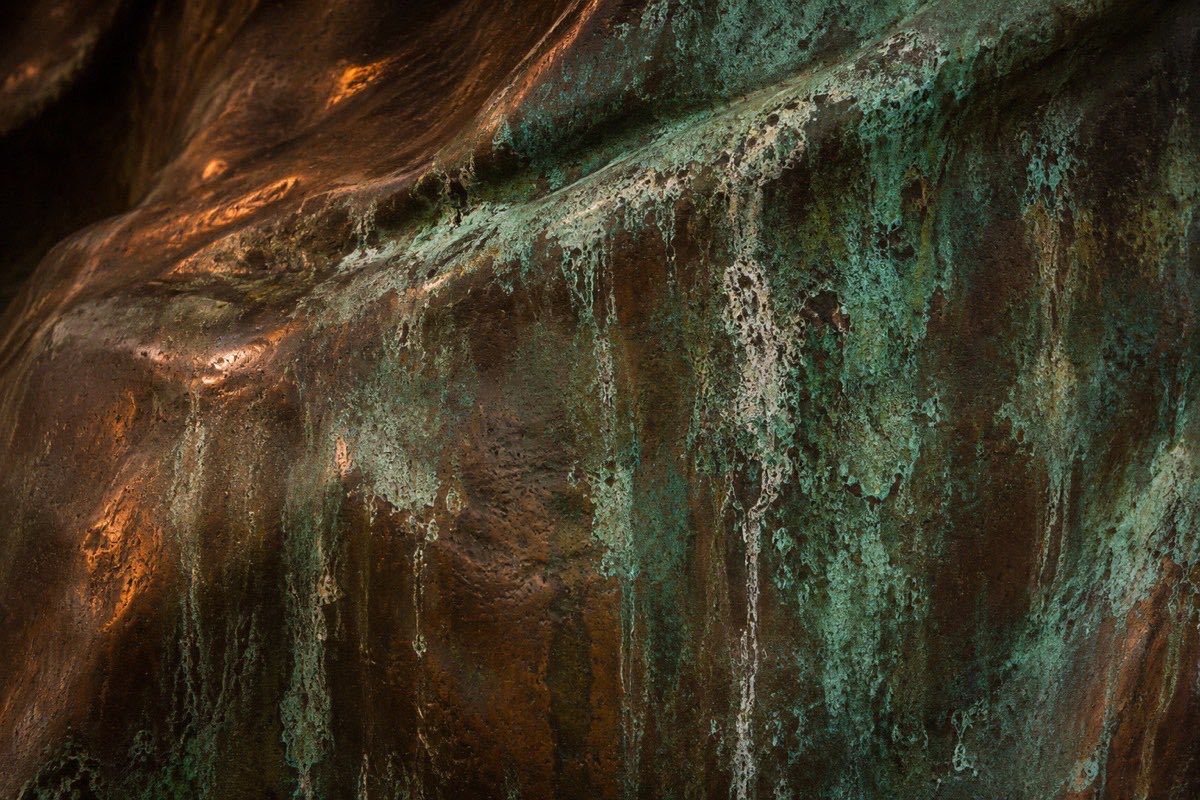
Left outside, copper alloys slowly grow a green layer of copper salts. In the studio, patination is speeded up by applying chemicals to heated metal. A few of the basic ones:
Polished metal straight from chasing, before any patina.
A sulfur compound that turns copper alloys brown black.
Gives a blue black surface.
Gives yellow brown tones.
Gives blue green.
Each guide follows one thread: how bronze is cast and coloured, which material suits which place, and how public and church sculpture comes about.
Guide 01
The lost wax casting process step by step: model, mould, wax, sprues, ceramic shell, burnout, pour and chasing, and why the method is still used for bronze.
Read the guideGuide 02
What bronze patina is, why bronze turns green, which chemicals give brown, black or blue green, and how long bronze statues last outdoors.
Read the guideGuide 03
Sculpture materials compared: what bronze, stone, wood, concrete, glass and clay each do well, which last outdoors, and how each one is worked.
Read the guideGuide 04
Public art definition explained: what makes art public, how percent for art programs fund it, and the difference between a monument and a memorial.
Read the guideGuide 05
Liturgical sculpture explained: crucifix, Stations of the Cross, altarpiece and tympanum, why churches use statues, and how church sculpture developed.
Read the guideGuide 06
How to commission a sculpture: committee, brief or request for proposals, artist selection, maquette, contract, fabrication and installation, explained in general terms.
Read the guideMuch public sculpture exists because of a simple rule: a small share of the cost of a public building, usually around one percent, is set aside to commission art for it.