Public art: definition, monuments, memorials and percent for art
Public art is art in any medium whose form, function and meaning are shaped for the general public through a public process. It is physically and visually accessible in public spaces, outdoors or inside buildings. This article explains what public art means, how monuments differ from memorials and where the one percent rule comes from.
Public art definition
Not every work outside a gallery is public art. A work must be accessible to everyone, be located in public space and be developed through a public process involving the community. It is often publicly funded and can be permanent or temporary.
The connection to place also matters. Public art responds to its setting and community. Creators work with architects, contractors, residents, designers and donors. This collaboration is part of what defines public art. The work responds to a particular setting rather than simply occupying it.
Graffiti and street art raise a separate question. Works made without official permission have usually been excluded from public art, although this view is sometimes reconsidered. The boundary can change.
What is the purpose of public art
Public art is made for the general public, not just for the artist or a small group of viewers. Its form, function and meaning take shape through a public process that includes the community's voice. This purpose distinguishes public art from a work simply placed outdoors.
Examples of public art
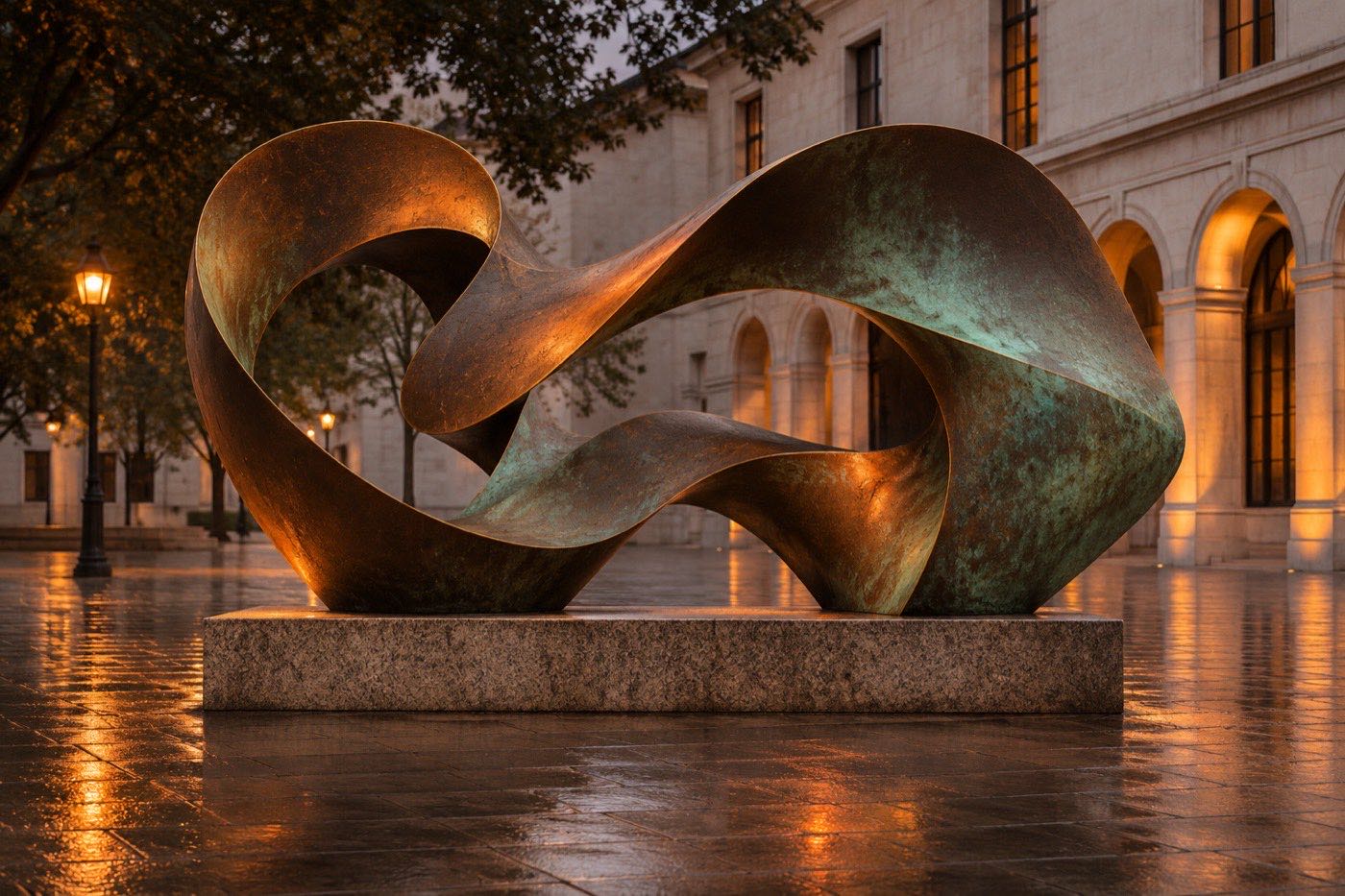
Public art includes sculptures, statues, fountains, parks and memorial plaques. It can use any medium, be indoors or outdoors, and be permanent or temporary. In each case, the place is as important as the form, and the public has physical and visual access to the work.
Percent for art programs
Percent for art is a rule that sets aside part of a building project's cost, usually about one percent, to commission and install public art. It is one way to fund art for new buildings.
This approach dates back to the United States. From 1934 to 1943, the Treasury Department's Section of Painting and Sculpture applied a one percent rule to the cost of federal buildings. In 1959, Philadelphia adopted the first such city ordinance in the United States, followed by Baltimore (1964), San Francisco and Hawaii (1967) and Seattle (1973). By 1984, there were more than 200 such ordinances in the United States. According to the National Assembly of State Arts Agencies, programs operate in 27 states and territories.
The rate varies. The General Services Administration (GSA) Art in Architecture program sets aside 0.5 percent of the estimated construction cost of a new federal building to commission art. In France, the "1% artistique" rule has applied since 1951.
Critics of these programs have raised concerns about bureaucracy, delays, vandalism and unresolved questions about future conservation.
Monument vs memorial
A monument is an object that commemorates a person or event. The word comes from the Latin monumentum, from monere, meaning to remind or to warn.
A memorial is an object or place dedicated to remembrance, usually of someone who has died or a tragic event. It can be a sculpture, statue, fountain or park, though it is most often a plaque or gravestone. Larger memorials are sometimes called monuments. A monument is always a kind of memorial, but not every memorial is a monument.
Who looks after public art
Care for public art continues after installation. Questions about future conservation, raised by critics of percent for art programs, remain relevant for as long as a work stays in public space. Architects, contractors, residents, designers and donors contribute to public art, so many people have a stake in its setting.