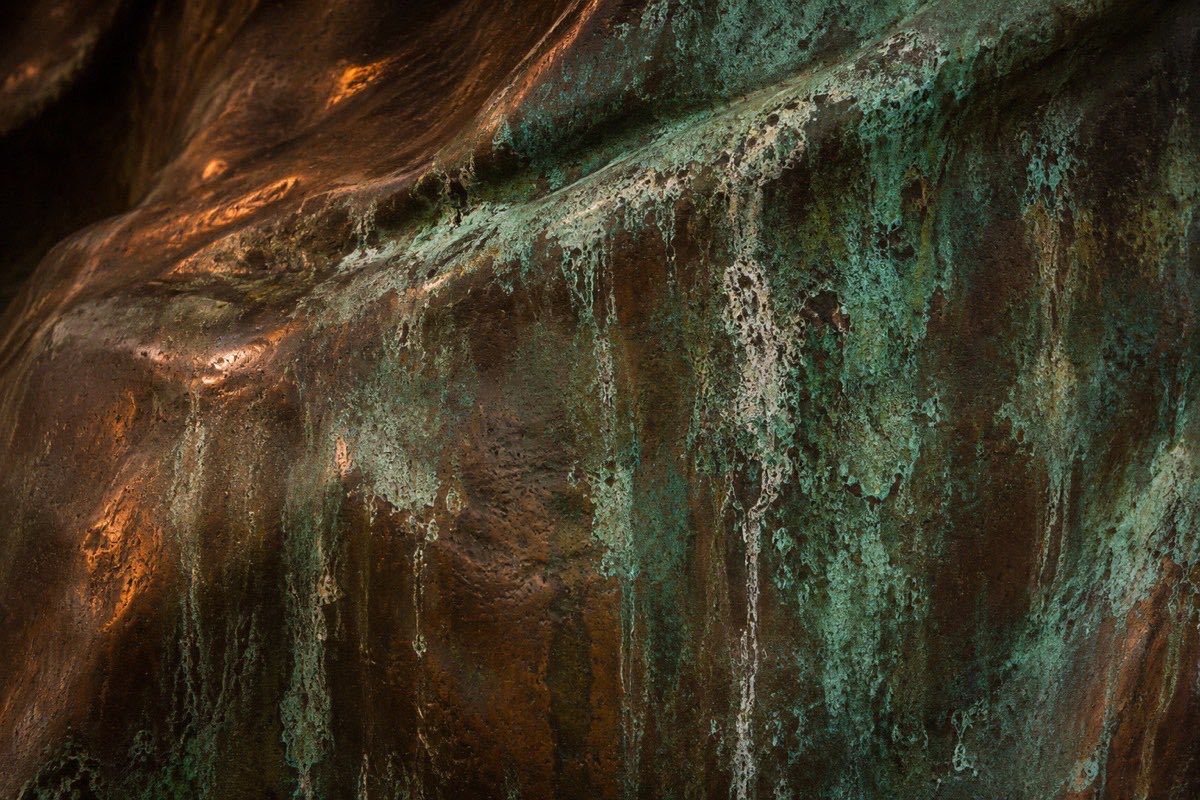
Bronze patina: the colour of time
Bronze patina is a thin surface layer that changes a sculpture’s appearance over time and affects how it withstands the weather. A darkening or greening surface does not usually mean the bronze is decaying: patina can both protect and decorate it. This article explains how patina forms, what colours it takes and how long bronze can last.
What is patina on bronze
Patina is a thin layer that forms on copper, brass, bronze and similar alloys. It consists of compounds such as oxides, carbonates, sulfides or sulfates. These form through exposure to oxygen, rain, acid rain, carbon dioxide and sulfur compounds. Each affects the surface differently, so no two patinas look quite the same.
The word comes from the Italian patina, meaning a thin deposit, which in turn comes from the Latin patina, meaning a pan or shallow dish. The process is called patination, whether it happens naturally or is deliberate. Patina can protect the material from corrosion and weathering, and is also valued for its appearance.
Why bronze turns green
The composition of patina depends on the surroundings. Green patina on copper and bronze, sometimes called verdigris, is a mixture of copper chlorides, sulfides, sulfates and carbonates. Their proportions depend on the environment. Patina is a mixture of compounds, not a single substance.
In clean rural air, copper reacts slowly with carbon dioxide and water to form a basic copper carbonate. In urban and industrial air, acid rain drives the process, so sulfides and sulfates dominate. The same bronze sculpture can therefore develop different patinas in an industrial city and in the countryside.
Natural patina takes many years to develop. It forms faster in damp coastal climates than in dry inland areas. Both time and atmospheric conditions shape how bronze ages.
Applied patina: chemicals and colours
The colour bronze takes as it ages depends on the conditions and whether the patina formed naturally or was applied. Patina colours range from matte sandstone yellow to deep blues, greens, whites, reds and various shades of black. Pigments are sometimes added.
Sculptors usually create patina by applying chemicals to heated metal. Chlorides produce greens, while sulfur compounds produce browns. These colours reflect the different compounds that form on the surface.
For copper alloys, ammonium sulfide produces blue black, liver of sulfur produces brown black, cupric nitrate produces blue green and ferric nitrate produces yellow brown. Workshop recipes and proportions are not included here.
Wax and protective coats
After patination, the surface is often sealed with wax, oil or clear lacquer. This coating covers the patina developed on the heated metal and forms part of the finish.
How long do bronze statues last outside
Bronze is one of the most durable materials used for sculpture. Bronze sculptures have been recovered intact from shipwrecks and ruins, and ancient Greek and Roman bronzes have survived for more than 2,000 years. Their survival offers strong evidence that bronze can last outdoors for a very long time.
Corrosion did not determine the fate of most ancient works. Few large ancient bronzes survive because many were melted down for weapons or new monuments. In those cases, people caused their loss.
How long a particular sculpture lasts depends on the climate, air quality and surface protection, so there is no single lifespan. Patina can protect the metal from corrosion and weathering. Bronze that darkens or turns green outdoors is not necessarily deteriorating.