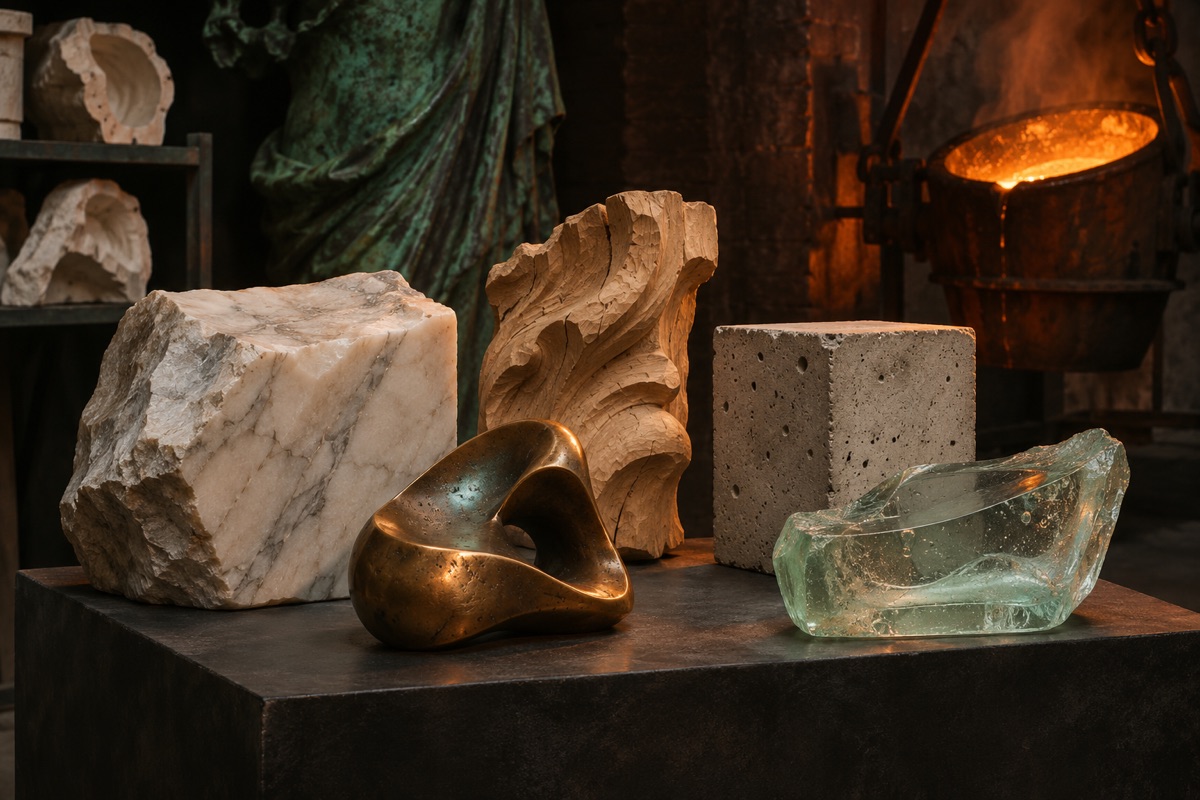
Sculpture materials compared: bronze, stone, wood, concrete and glass
Stone sculpture is made by removing material from a block, while bronze sculpture is cast. This difference shows how much the result depends on the material. Sculpture materials determine how a work is made, how long it lasts and where it can stand. How do the main materials differ, and which are suitable for outdoor use?
The classic sculpture materials
Sculpture materials can be grouped by durability. The most durable traditional materials are metals, especially bronze, followed by stone and ceramics. Wood, bone and horn are less durable but cheaper.
Casting does not always require heat. Materials such as epoxy resins, concrete, plaster and clay can be cast and allowed to set after their components are mixed. Unlike metal casting, this process does not require melting the material.
Clay has a distinct role. It is one of the oldest sculpture materials, and many works later cast in metal are first modeled in clay. Sculptors also make small preliminary models, or maquettes, from plaster, wax, unfired clay or plasticine.
Sculpture materials can therefore be grouped by durability or by the techniques used to work them: removing material, casting, modeling, welding or forging.
Bronze and other metals
Bronze and related copper alloys are the oldest and still the most popular metals for cast sculpture. Their strength and ductility allow sculptors to depict figures in motion, which is harder to achieve in stone. For bronze sculpture, the sculptor typically models the form first, for example in clay, before casting it in metal.
Steel sculpture uses techniques such as welding and forging. Modernist sculptors also worked with painted steel. From the 1960s, acrylics and other plastics were also used.
Stone
Stone sculpture involves carefully removing material from a block, so mistakes are hard to undo. Alabaster, a mineral form of gypsum, is soft and easy to carve, making it suitable for small works. Copies of stone statues were traditionally made using the pointing method.
Wood
Wood was widely used, but wooden sculptures have survived less well than those made from other materials. Wood is vulnerable to rot, insects and fire, so outdoor wooden sculptures do not last long in most climates. However, wood is light, holds fine detail and is easier to work than stone. Wooden sculptures were often painted over a base layer called gesso, but the paint fades over time.
Concrete and other cast materials
Concrete is one of the materials cast without heat mentioned above. The process differs from bronze casting, although both involve making a mold and pouring material into it.
Glass
Sculptors work with glass using many techniques, but large glass sculptures are a recent development. Glass can be cast into molds, melted in a kiln (kiln casting), blown and shaped while hot. Glass sculpture made using the lost wax method requires firing at about 790 to 830 degrees C and several days of cooling.
Best material for outdoor sculpture
Bronze, stainless steel, aluminum and granite are among the materials most often recommended for outdoor sculpture because they withstand outdoor conditions well. Wood is unsuitable in most climates because it does not last long outside. Durability also depends on how the work is made, so a durable material alone does not guarantee a good result.