How to commission a sculpture: the process step by step
Commissioning a sculpture involves several stages, whether the commissioner is an individual, a public body or a company. Funding must be secured, an artist chosen and a contract signed before work begins. This guide explains each step, including those for sculpture intended for public spaces.
What does it mean to commission a sculpture
A commission is an order to create a work, often on someone's behalf. Private individuals, public institutions and companies can all commission sculpture. The practice has a long history. Rulers and governments have commissioned public art since antiquity to display power and wealth. In Renaissance Italy, art developed through the patronage of wealthy merchants and officials.
Today, the principle remains the same, though the commissioners differ. Donors sometimes commission public works as gifts to cities. Public and private bodies can commission public art, and state, county and local governments often allocate funds for it. Dioceses have their own guidelines for commissioning liturgical art.
Committee and brief
Before considering artists, the commissioner must secure funding, define the theme, consider the concept and write a brief.
Guidelines from sculptors' associations recommend appointing a committee to oversee the process and select the artist. Another step is a request for proposal (RFP), a document inviting artists to submit proposals.
The sculptor's brief should describe the project, its background and goals, the sculptor's role and the project's financial position.
Finding and choosing a sculptor
The commissioner must first define what they are looking for, then issue a call and compare submissions. The committee oversees the process to ensure that the artist is chosen according to clear rules.
Public art commissions step by step
Public commissions usually begin with a call for artists or proposals. Selection panels then choose the strongest candidates from the submissions. Contracts are signed and advances paid before work begins.
The time needed depends on the project's scale. Some temporary projects can be completed quickly, while large permanent public art projects can require years of planning.
Commissioning a bronze sculpture
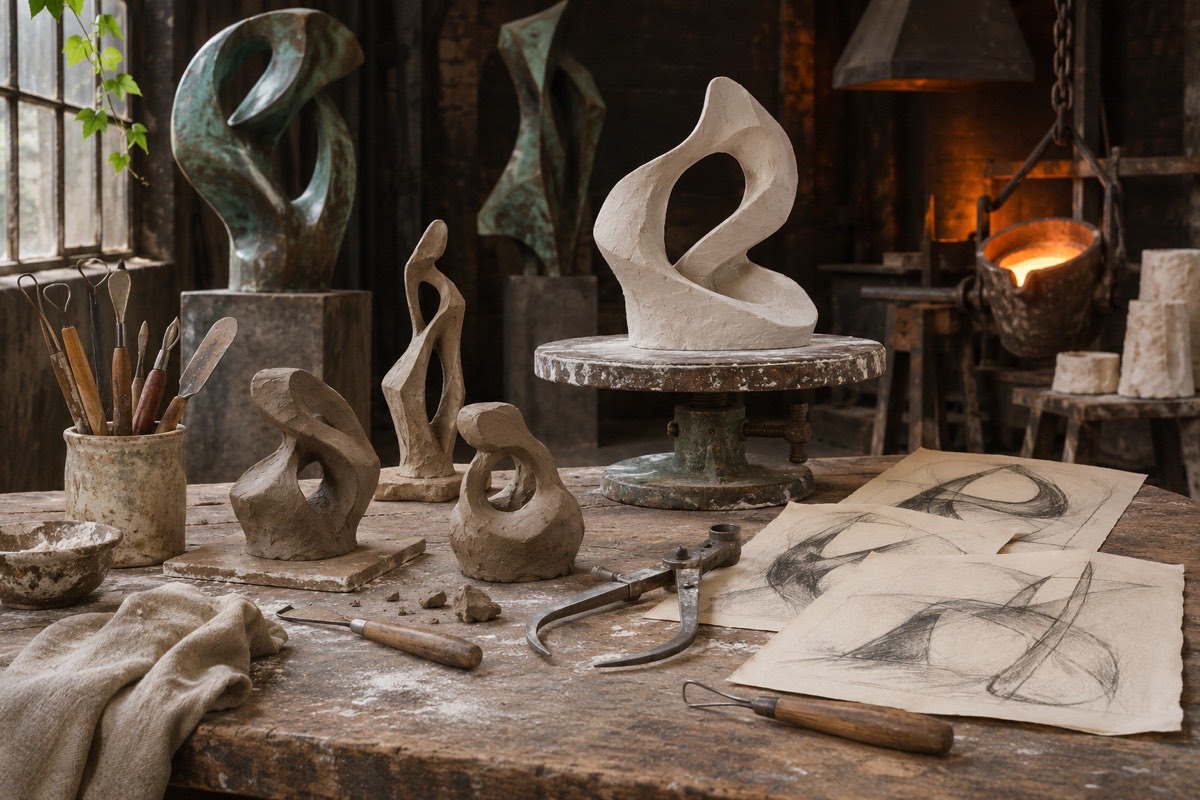
A large bronze sculpture is made in stages, beginning with small study models and an intermediate model. A plaster model preserves the work until a patron is found to fund the casting. This allows the commission to proceed over time.
Which path fits
The process depends first on who is commissioning the work. A public institution usually uses a call, selection panels and contracts with advance payments. A diocese follows its own guidelines for commissioning liturgical art.
The second factor is the project's scale. A temporary project can be prepared quickly, while a large permanent one can require years of planning.