The lost wax casting process: how a bronze sculpture is made
Lost wax casting, also called cire perdue, is one of the oldest metalworking techniques. The oldest known examples are gold objects about 6,500 years old from the necropolis in Varna, Bulgaria. This article explains how a bronze sculpture is made, from the model to the patina, and what happens to the wax along the way.
What lost wax casting is
Lost wax casting, also known as investment casting, produces a copy of an original sculpture, usually in metal such as bronze, silver, gold or brass. In Europe, the method was common until the 18th century. Each stage preserves the sculpture's shape as it is reproduced in metal.
There are two variants. In the indirect method, the sculptor shapes a model in wax, clay or another material, then makes a mold from it. Wax or oil-based clay is often chosen because it stays soft for a long time. In the direct method, the model is made in wax from the start. If no mold has been made and the casting fails, the work is lost.
Lost wax casting process step by step
The first stage is to make a model. A mold is then made from the finished model, with a soft inner layer of latex, polyurethane or silicone supported by a rigid jacket of plaster or fiberglass. The mold usually has at least two parts.
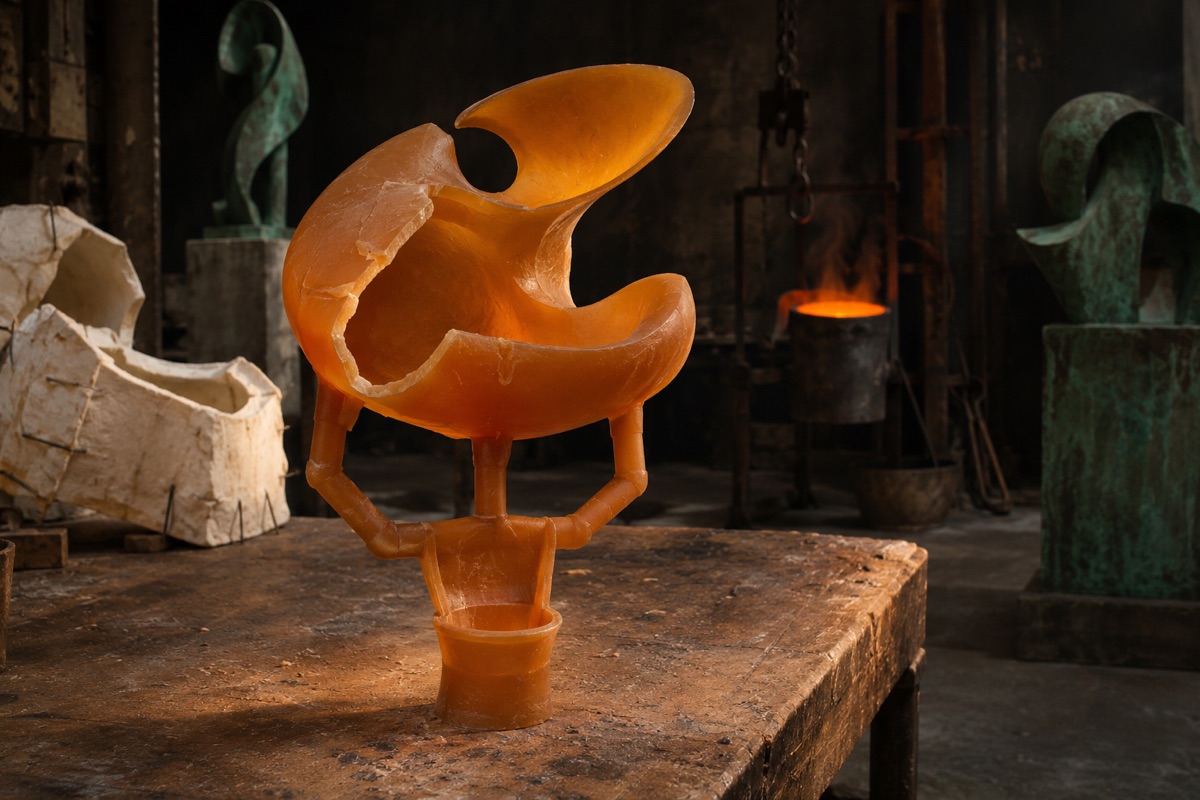
Next, molten wax is poured into the mold, which is rotated to coat its walls evenly, usually to a thickness of about 3 mm. This is repeated until the required thickness is reached. The hollow wax copy is removed from the mold and chased with a heated tool to remove marks left by the mold's joints. The mold can be used to make further copies.
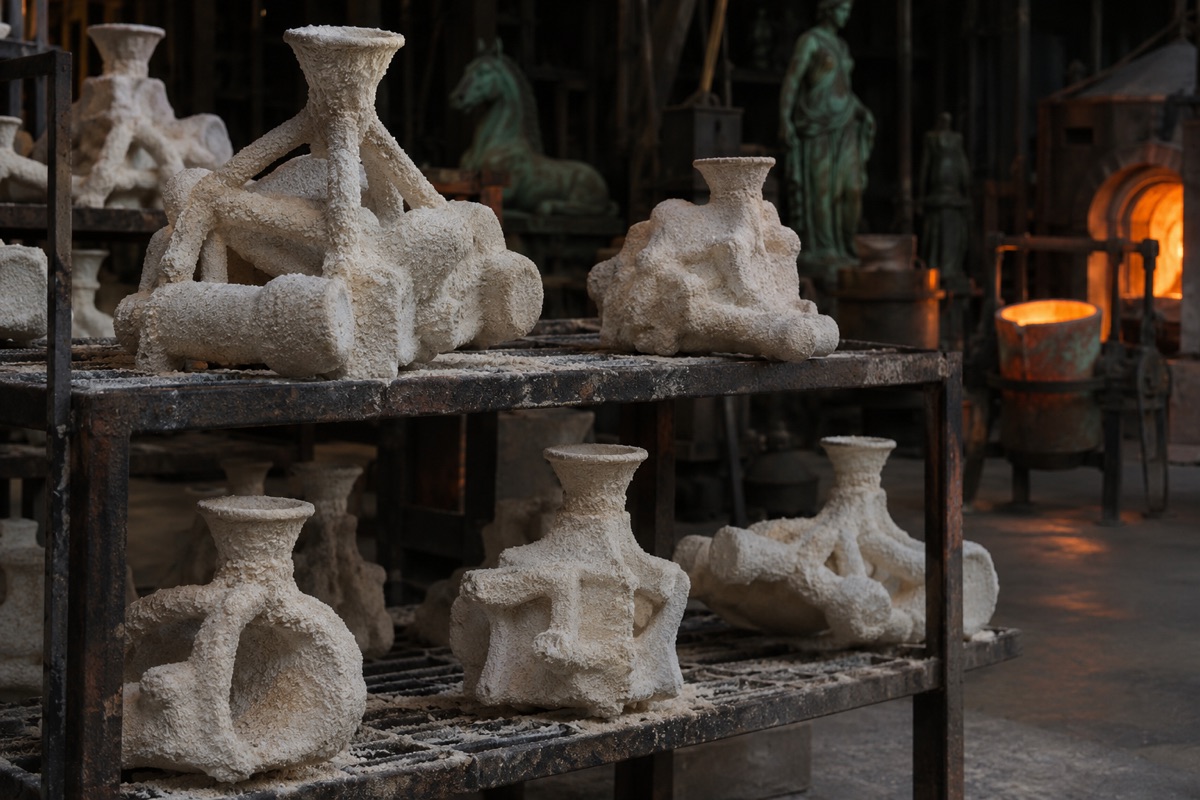
A system of wax gates and vents is attached to the wax copy. It resembles a tree, with a wax pouring cup at the top. The prepared model is dipped in a silica slurry, then sprinkled with fine silica sand. This is repeated until the coating is at least about half an inch, or roughly 1.3 cm, thick. Larger sculptures need thicker shells.
What happens to the wax
In the kiln, heat hardens the ceramic shell while the wax melts and runs out. This gives the process its name: the wax is "lost". The wax can be recovered, but it is often burned out. The empty space inside the shell exactly reproduces the wax copy's shape and will be filled with metal.
The shell is checked for cracks, patched with refractory paste and fired again. It is then placed in a box of sand with the cup facing up. The metal is melted in a crucible and poured into the hot shell. The shell must be hot because a cold shell would crack from the temperature difference.
After the metal cools, the shell is broken off with a hammer or removed by sandblasting. The gates are cut off, and the casting is chased, ground and polished. Finally, a patina can be applied.
How large bronze sculptures are made
Large bronze sculptures require more preparation. The artist first makes small study models, then an intermediate model with all the details, and finally a full-size model on a supporting structure. Large sculptures are cast in parts, which are joined by welding.
Is lost wax casting still used
Yes. In industry, the same principle is called investment casting. The lost wax method is also used to make jewelry, dental crowns and cast glass sculpture. This technique is thousands of years old and still serves artists and manufacturers by replacing a wax form with the casting material.